


This article may contain affiliate links where I make a small commission for purchases you make from links that you click from this article. By purchasing through these links, you support me at no additional cost to you. Thanks for your support.
The first time you land in Japan, it doesn’t take long before you notice them—cats. Not real ones (although those are everywhere too), but the little ceramic kind with one paw raised, quietly waving at you from shop windows, restaurant counters, and temple stalls. The famous maneki-neko.
Sure, you’ve probably seen them before—maybe next to the cash register at your local takeout spot—but in Japan, they feel different. More intentional. More…everywhere. And as someone who has spent years traveling through Japan (and, let’s be honest, actively seeking out its cat culture), I’ve come to realize that this little waving cat is more than just cute kitsch—it’s part of the cultural fabric. Honestly, it’s one of the reasons I keep going back…and why I even created a Cat Lady small group tour of Japan!
The maneki-neko—literally “beckoning cat”—is believed to bring good fortune, prosperity, and a steady stream of customers through the door. But like most things in Japan, there’s a deeper story behind that raised paw. Where did it come from? Why is it waving? And how did this little figurine become one of the most recognizable symbols of luck around the world?
Let’s dig into the history of maneki-neko and uncover the stories, symbolism, and cultural quirks behind Japan’s most famous feline ambassador.
History of Maneki Neko
The maneki-neko first appeared during the Edo period and symbolizes good fortune. It’s closely linked to the charming Gōtoku-ji Temple in Tokyo, where this lucky cat’s legend truly began to shine! Its design features that signature raised paw—with the left paw working its magic to attract customers and the right paw bringing good luck.
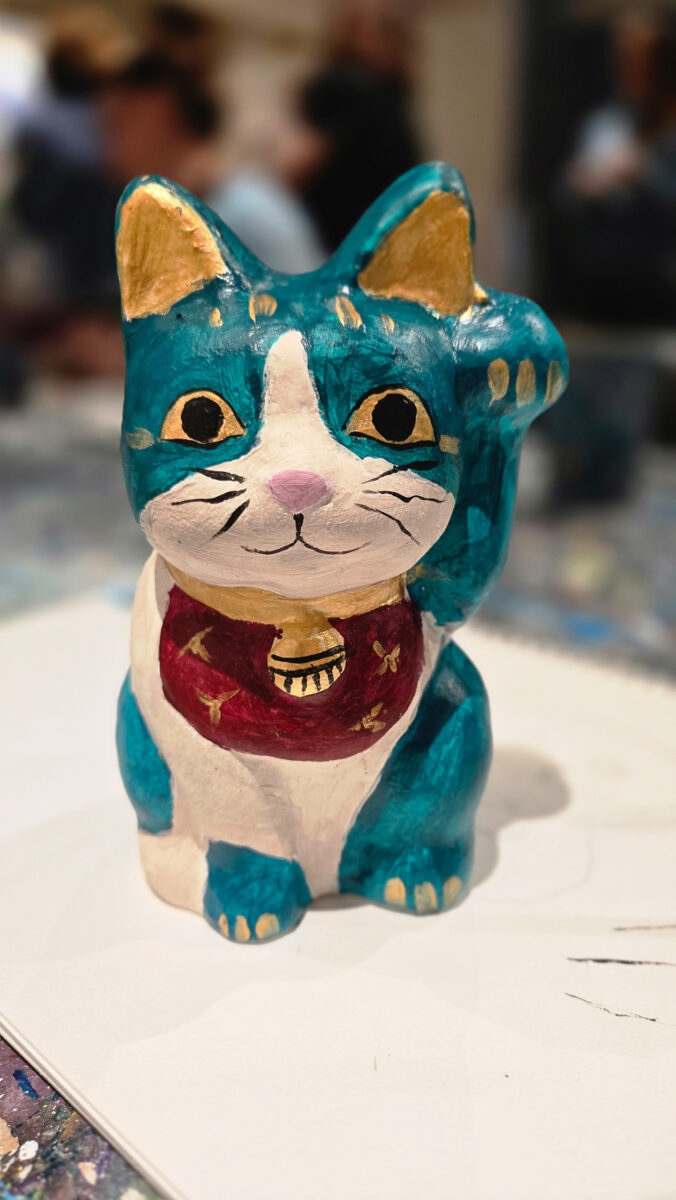
Each color and accessory adds delightful layers of meaning to the maneki-neko. Over time, the beloved Japanese symbol has gained absolutely incredible global popularity, influencing other cultures and appearing in all sorts of cat merchandise.
Origins of Maneki Neko
If you really want to understand maneki-neko, you have to go to where the story begins—and yes, I’ve gone down that rabbit hole (or cat trail) more than once in Tokyo.
Most people trace its origins back to the Edo period, a time when Japan’s cities were booming with merchants, artisans, and a growing obsession with symbols of luck and prosperity. And like many things in Japan, the story isn’t just history—it’s layered with legend – and luck.
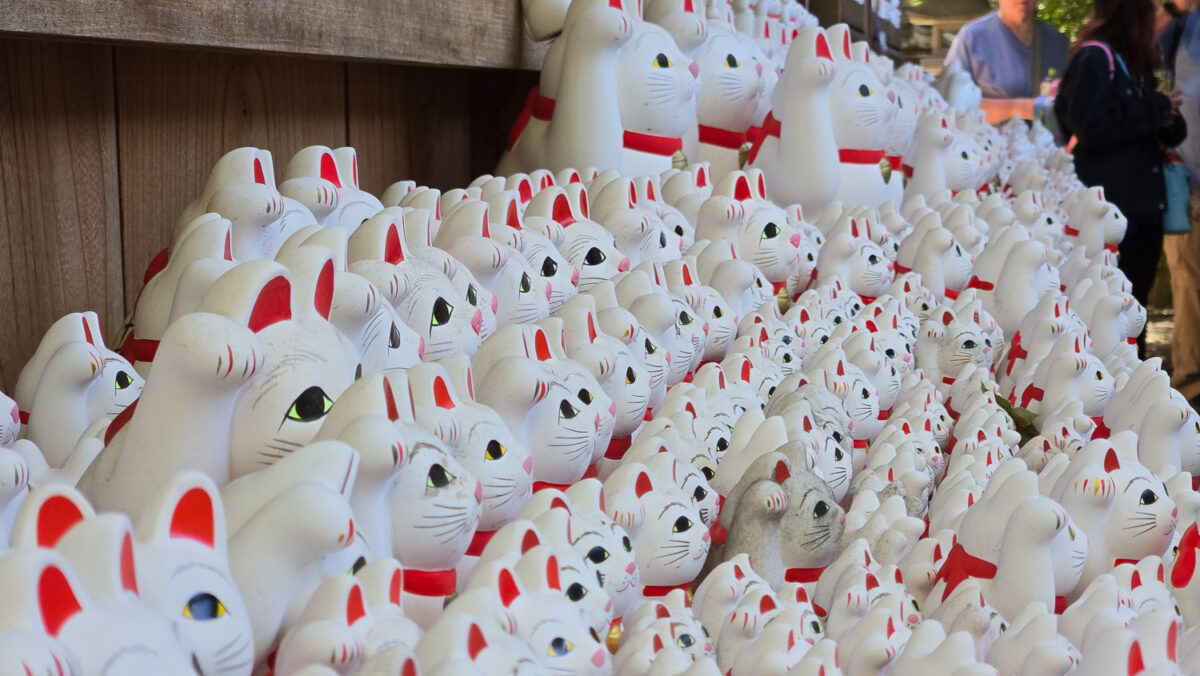
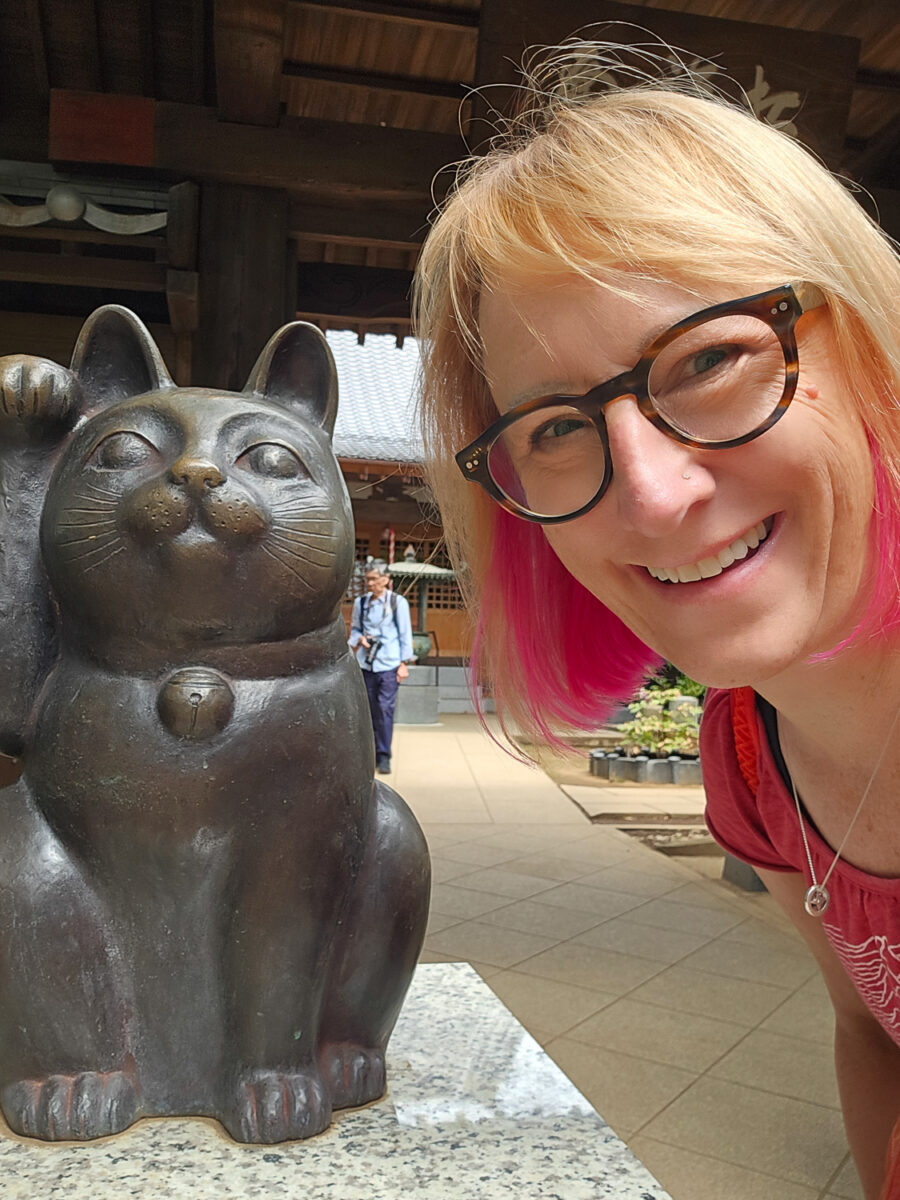
One of the most famous places associated with maneki-neko is Gōtoku-ji Temple, tucked into a quiet Tokyo neighborhood that most tourists never reach. I’ve been there multiple times (it’s a part of my cat tour!), and it’s one of those places that feels both peaceful and a little surreal— thousands of small white cats lined up, all with that same raised paw. However, with the rise of social media and the popularity of cats these days, I would say it’s a little less peaceful than when I first visited. Let’s just say – it’s very popular now.
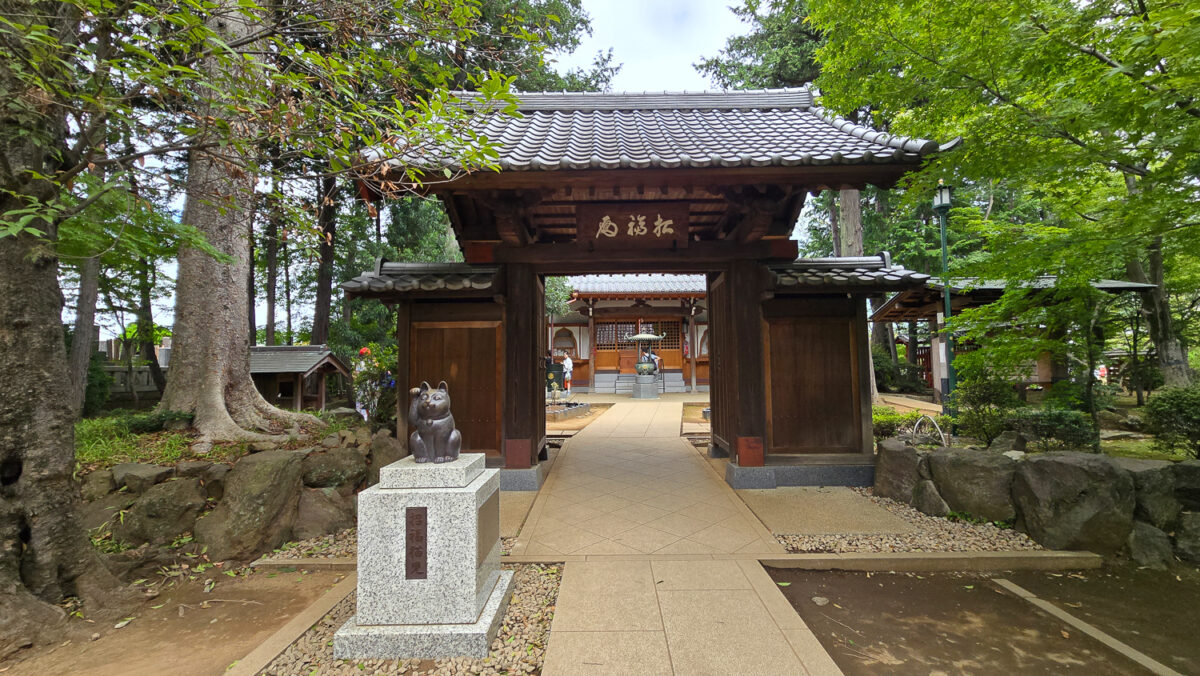
According to legend, a samurai named Ii Naotaka was taking shelter under a tree during a storm near the temple. He noticed a cat sitting at the temple entrance, raising its paw as if beckoning him inside. Curious (and maybe a little desperate to get out of the rain), he followed it.
Moments later, lightning struck the very tree he had been standing under.
Grateful—and probably a bit shaken—Naotaka became a patron of the temple, helping it prosper. And just like that, the idea of a “beckoning cat” bringing luck and protection was born.
Whether you believe the story or not, standing there at Gōtoku-ji, it’s easy to see how this legend stuck.
By the late Edo period and into the Meiji era, these cats started showing up beyond temples—sold in markets, displayed in storefronts, and adopted by merchants always looking for a little extra luck. It wasn’t just about superstition—it was about business. And honestly, that’s still true today.
Maneki Neko Symbolism and Design
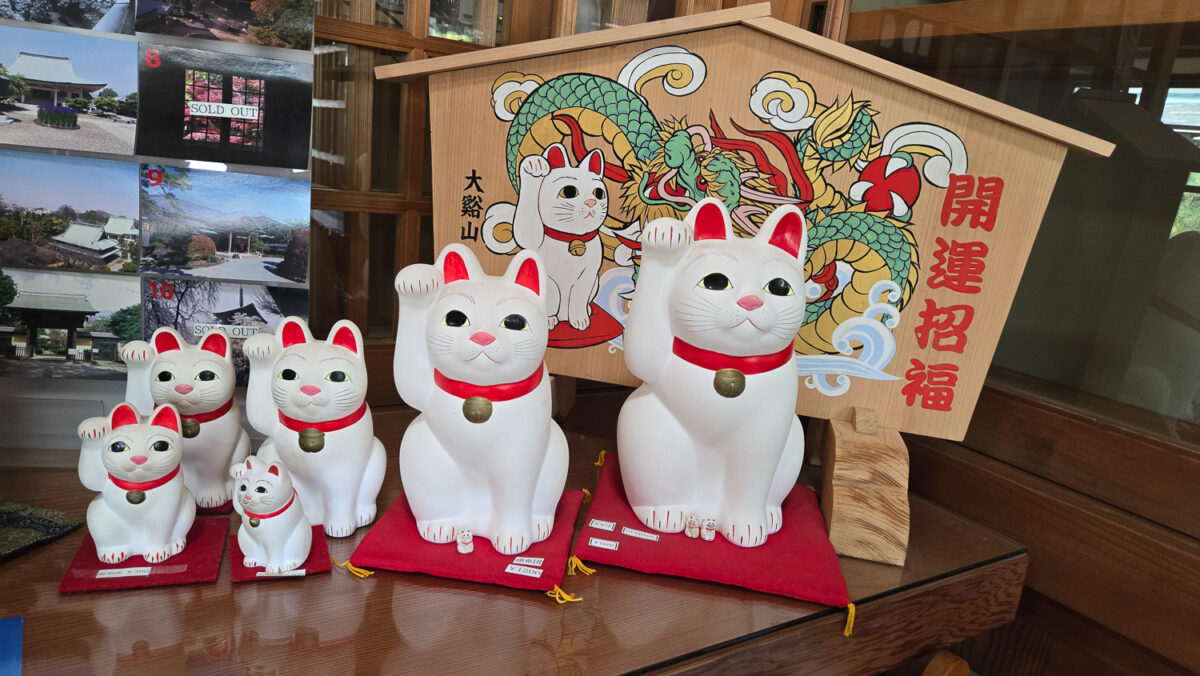
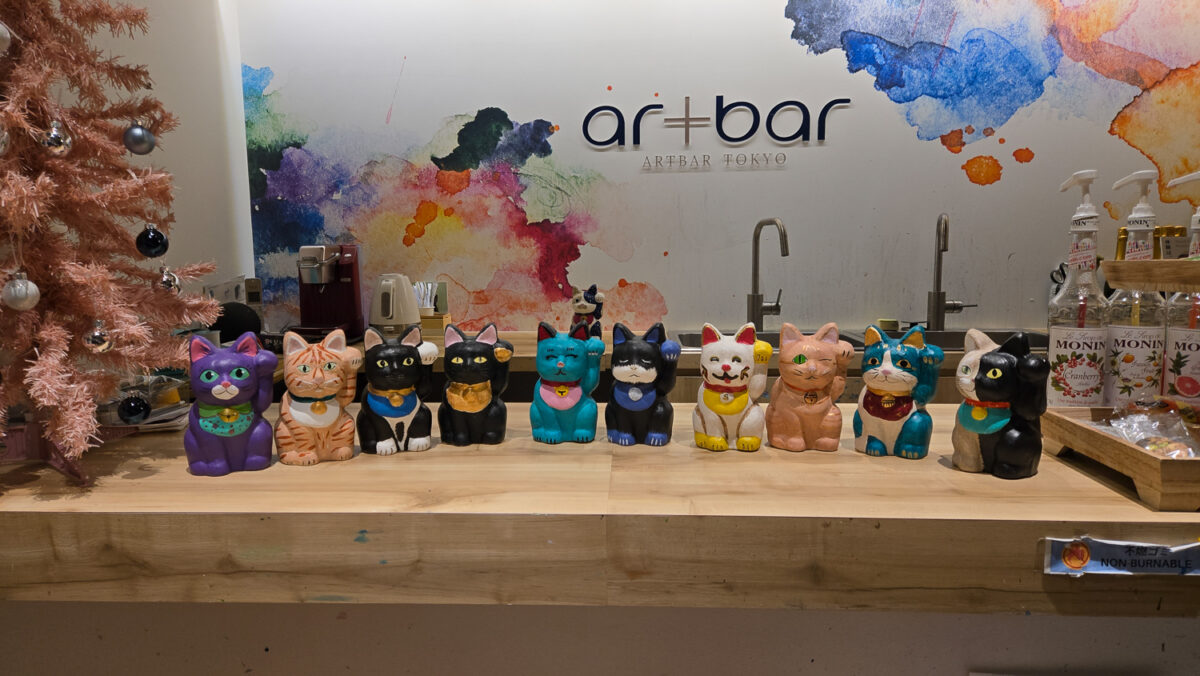
Once you start paying attention, you realize that not all maneki-neko are the same—and in Japan, those details are important!
The raised paw is the most obvious feature, but even that has meaning:
- Left paw up: meant to attract customers (you’ll see this a lot in shops and restaurants)
- Right paw up: brings good fortune and money
- Both paws up: a bit of an overachiever—protection and prosperity – you don’t see this one very often – but I love it!
And yes, the paw’s height matters too. The higher it’s raised, the more luck it’s supposed to pull in. Go big or go home, apparently.
Color plays a role as well, and this is something I didn’t fully appreciate until I started visiting different regions and markets:
- White: purity and general good luck (the most traditional)
- Black: protection from evil spirits
- Red: health and warding off illness
- Gold: wealth and financial success
You’ll also notice accessories—little details that are easy to overlook but actually carry meaning. Collars and bells date back to when wealthy households adorned their cats. Coins (often koban) symbolize wealth, while bibs are tied to temple traditions and protection.
Over time, the design has shifted from more realistic cats to the rounded, almost cartoonish version we recognize today. But even with all the modern variations, the core idea hasn’t changed: this is a symbol meant to invite something in—luck, money, people, opportunity.
Cultural Significance in Japan
What I love about maneki-neko is that it’s not confined to one place or one meaning—it’s woven into everyday life in Japan.
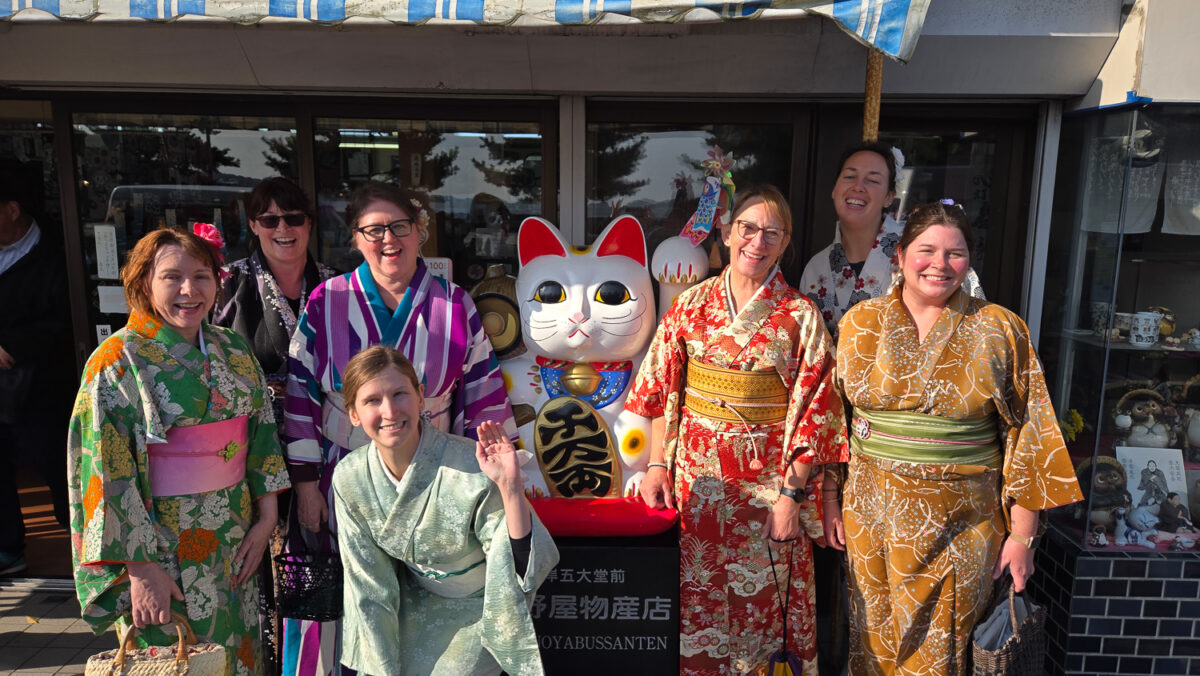
You’ll see them everywhere: tucked into ramen shops, guarding the entrance of tiny neighborhood bars, sitting quietly in temple corners. And after spending so much time traveling through Japan, I’ve come to see them less as souvenirs and more as little signals of hope and intention.
The gesture itself is also uniquely Japanese. That raised paw isn’t actually “waving” in the Western sense—it’s a beckoning motion, calling something toward you. Once you know that, it changes how you see it.
And for business owners, it’s not just decorative. The beckoning paw is a way of saying: come in, stay awhile, spend a little money.
Maneki-neko Day in Japan (September 29)
Yes—there’s actually a day dedicated to the beckoning cat. Maneki-neko Day falls on September 29, chosen for a bit of Japanese wordplay: 9 (ku), 2 (fu), 9 (ku) can be read as “ku-fu-ku,” echoing fuku, or “good fortune.” Very on brand. It’s not a national holiday, but if you’re in Japan around that time, you’ll notice small nods to it—especially in places tied to the cat’s origins, like Gōtoku-ji Temple, where visitors come seeking a little extra luck (and, let’s be honest, great photos).
What I love is that the day isn’t about big celebrations—it’s about intention. Shops might refresh their displays, temples may see more visitors leaving offerings, and some businesses even replace or reposition their maneki-neko as a way of “resetting” their luck.
If you happen to be in Japan on September 29, celebrating Maneki-neko Day isn’t about finding one big festival—it’s more about leaning into small, meaningful experiences (which, honestly, is very Japanese).
Global Spread and Popularity
Of course, maneki-neko didn’t stay in Japan – after all, cats like to roam!
At some point, it made the leap—across Asia, into Chinatowns around the world, and eventually into global pop culture. Now it’s just as likely to be found next to a cash register in the U.S. as it is in Tokyo. But outside of Japan, it often loses its context. Before I ever went to Japan – I just referred to it as the “waving cat” – and assumed that it was an Asian thing since I mainly found it at Asian restaurants. I never understood the deeper meaning.
There are even similar figures in other cultures—like Thailand’s Nang Kwak—that use a similar beckoning gesture to symbolize prosperity. It’s a reminder that the desire for luck and success is pretty universal…we just package it differently.
Famous Maneki-neko Locations in Japan
If you want to go beyond casually spotting a waving cat in a shop window, there are actually places where maneki-neko takes center stage—and they’re worth seeking out.
Temples
In Japan, it starts with Gōtoku-ji Temple, widely considered the birthplace of the beckoning cat. Tucked into a quiet Tokyo neighborhood, the temple is filled with thousands of small white maneki-neko left behind as offerings. It’s one of those places that feels both peaceful and a little surreal—and every time I visit, I find myself lingering longer than expected, wandering past rows of identical cats, and simply taking more time to enjoy the surroundings of the temple itself. Tip – be sure to wander into the nearby cemetery too!
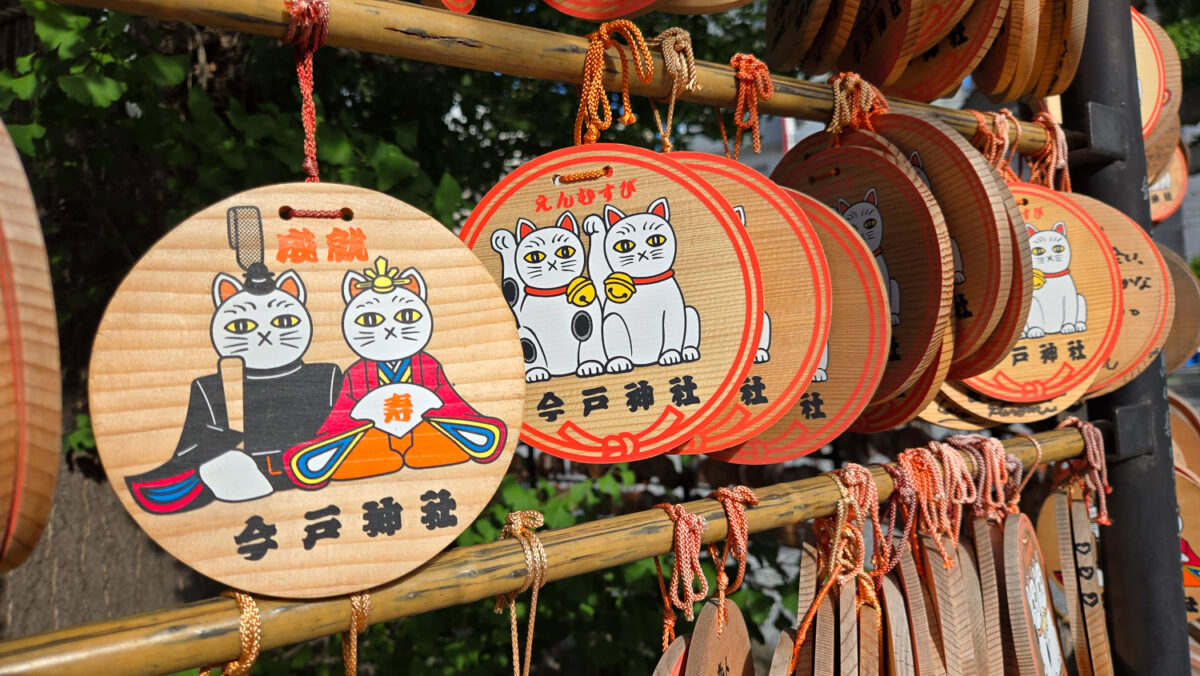
Not far away, Imado Shrine offers another origin story—and a slightly different vibe. Located near Asakusa, it’s easier to access but often overlooked. Here, maneki-neko are tied not just to luck, but to relationships and matchmaking, so you’ll see couples and hopeful romantics alongside curious travelers. It’s a smaller, more intimate stop, but one that adds another layer to the story.
If you want to go deeper into the craftsmanship behind maneki-neko, head to Japan’s ceramic heartland. The Maneki Neko Museum in Seto, Aichi Prefecture, is dedicated entirely to these figurines, showcasing everything from traditional designs to modern interpretations. It gives you a sense of how something so small became such a lasting cultural icon. Nearby, Tokoname Maneki Neko Street takes a more playful approach—this pottery town has an entire walking path lined with ceramic art, including a giant maneki-neko wall that feels equal parts quirky and impressive. It’s one of those places that reminds you Japan doesn’t take itself too seriously all the time.
Museums
There is also a very little-known Maneki-neko ‘shrine’ in Onomichi just off of ‘cat alley’. It’s not a place open to the public, as it’s a personal collection owned by the artist who created the paintings in Cat Alley. But I was lucky enough to meet the owner/artist when I was there, and he ‘invited me in’ to see his collection. Maneki-neko worked its magic for me on that trip!
Outside of Japan, the maneki-neko has taken on a life of its own. You’ll find it in Chinatowns and Asian businesses around the world, often perched near the register, quietly waving customers in. It’s become such a universal symbol of prosperity that many people don’t even realize it originated in Japan. There are even a few unexpected places dedicated to it, like the Maneki Neko Museum in Cincinnati, Ohio, which houses a surprisingly large collection of lucky cats and highlights just how far this symbol has traveled.
It may look a little different outside Japan—more commercial, mainly—but the intention is still the same. That small raised paw, wherever you find it, is always doing one thing: inviting something in.
Cat Islands in Japan
Japan’s “cat islands” sound like something dreamed up for Instagram—but they actually come from a much more practical (and interesting) place. Many of these small fishing communities brought in cats generations ago to control rodents and protect things like silk production or fishing gear. Then time did what it does best—young people left, populations shrank, and the cats just stayed. In some cases, they multiplied to the point where they now outnumber the residents. What you end up with isn’t a staged attraction, but something far more compelling: a quiet, slightly surreal slice of rural Japan where cats have simply become part of the fabric of daily life.
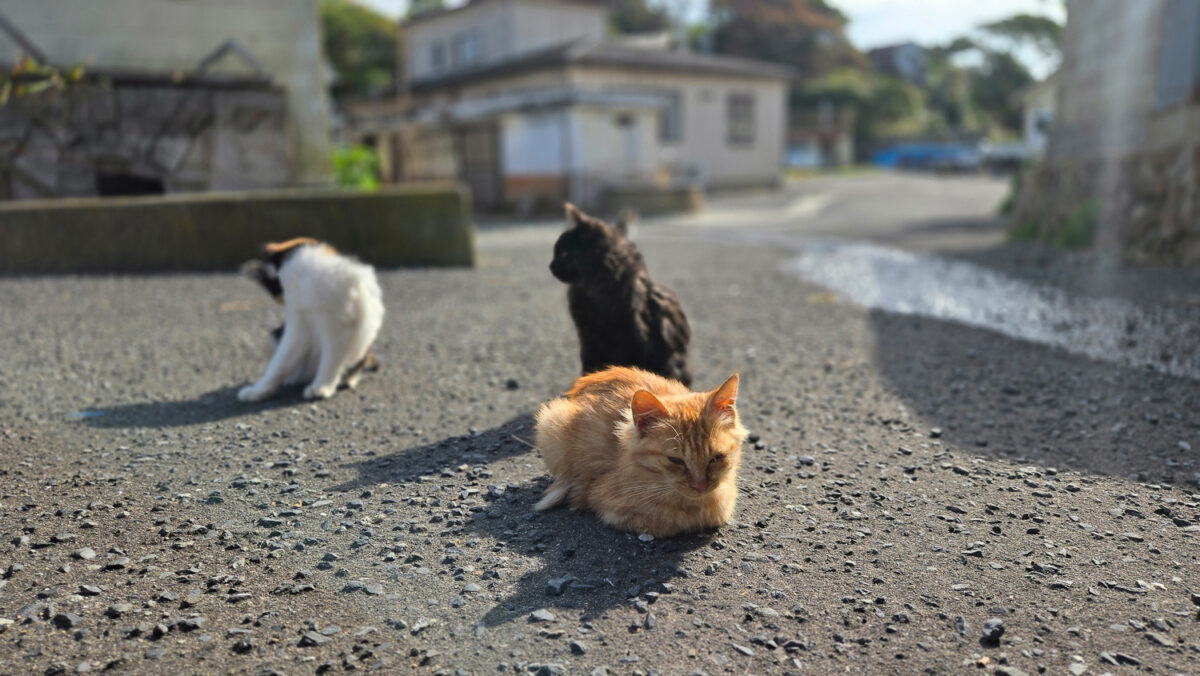
The most famous is Tashirojima in the Tohoku region—often considered Japan’s original cat island—where cats are treated as symbols of good luck and even have their own shrine. Aoshima is the one you’ve probably seen online, with its almost unbelievable cat-to-human ratio. And if you don’t want to venture too far from Tokyo, Enoshima offers a more accessible taste of the phenomenon. Each island is a little different, but that’s kind of the point.
Modern Interpretations and Uses
Like everything else in Japan, maneki-neko has adapted with the times. You’ll still find traditional ceramic versions, but now there are battery-powered and solar-powered cats endlessly waving from storefronts, keychains clipped to backpacks, and even pop culture versions showing up in advertising and mascots.
But what I find most interesting is that despite all the modernization, the intention hasn’t changed. It’s still about inviting something in—luck, opportunity, connection. And maybe that’s why it’s stuck around for so long.
Because honestly…who couldn’t use a little more of that?
Bringing Good Fortune Home
After spending so much time in Japan—and honestly, chasing down its cat culture more than I probably should admit—I’ve come to see maneki-neko as more than just a cute souvenir. It’s a small object with a surprisingly big story. One that started in the Edo period, shaped by legend, and somehow found its way into shop windows and homes all over the world.
In Japan, you don’t just place a maneki-neko randomly—it’s positioned with purpose. Near an entrance. Facing the door. Quietly doing its job of “inviting” something in, whether that’s customers, money, or just a little bit of good energy.
And maybe that’s why it resonates beyond Japan. Because at its core, it’s not really about luck in a superstitious way—it’s about hope. About creating a small, tangible reminder that you’re open to opportunity.
I have an entire maneki-neko ‘shrine’ in my home office thanks to my many trips to Japan! There is an unending array of souvenirs you can bring home. But the meaning doesn’t change. It’s still that same simple gesture: come in.
So whether you spot one in a Tokyo shop, bring one home from your travels, or just notice it next to your takeout counter, it’s worth pausing for a second. Because behind that tiny raised paw is a story of survival, belief, and a very human desire to welcome something better through the door.
