


Robert Kenyon

6 min read
The outcome of the Makerfield by-election will determine the direction of Britain. Harriet Symonds explores how Nigel Farage’s Reform are taking the fight to the King of the North
Reform has been burned once and knows it needs a different tack. In a marked change from the Gorton and Denton by-election strategy earlier in the year, in which the party was seen to underperform, the party will lean heavily into local issues to win in Makerfield.
It is set to be a test not just of the party’s growing reach in Labour heartlands, but of whether Andy Burnham’s personal popularity in Greater Manchester will be enough for Labour to beat Nigel Farage’s party.
Those familiar with the strategy claim keeping the campaign as local as possible will play well against Burnham in such a consequential by-election, which could see him become the next Prime Minister.
Their thinking is that any increased interest in Burnham’s national policy platform will draw attention away from local issues in Makerfield, allowing Reform to frame this as a by-election for Makerfield over a by-election for Prime Minister.
Reform’s candidate Robert Kenyon was deliberately chosen because he is hyper-local. A plumber, NHS worker and army reservist, he is well positioned as the antithesis of Westminster ambition.
The party will play heavily on the fact that their candidate is a local man born and bred in the constituency which the party will seek to pit against career opportunist Andy Burnham. Reform figures believe this type of candidate gives them the the best chance of winning against a well known figure like Burnham.
However, his campaign has already hit a hitch: there were allegations this week that an X social media account of his contained a number of sexist, violent and homophobic posts. A Labour party spokesperson said the posts were “disgusting” and added they show “he’s not fit to represent Makerfield”.
Reform, however, has said he will not be investigated, with a spokesperson saying the “comments were made before he was in politics”.
A Reform UK source told The House: “Rob is genuinely a local candidate. In the face of Burnham’s careerism, Rob is resonating on the doorstep.”
Kenyon has also been labelled as the party’s Hannah Spencer, a reference to the new Green MP who was a plumber before going on to win the Gorton and Denton by-election.
A Reform source described him as a “normal person who never planned to get into politics” a framing the party believes allows him to sidestep the polish and scrutiny typically expected of parliamentary candidates.
Unlike in Gorton and Denton, the Greens themselves are unlikely to be a threat, with University of Manchester professor of political science Rob Ford dismissing them as “a rounding error,” telling The House: “They have never been a thing in Makerfield, the people there hate the clean air zone, as a large majority commute to work by car and have little other option due to poor public transport.”
Reform’s hyperlocal message is intended to sit alongside the party’s national policy platform. Reform campaign literature seen by The House promises action on the cost of living, cutting immigration and tackling crime.
The party is also seeking to exploit tensions within Labour over Brexit, fuelled in part by Burnham’s leadership rival Wes Streeting. Reform will seek to portray Burnham as inconsistent on rejoining the EU and willing to adjust his policy positions for his own gain.
On immigration, Reform will argue Burnham has shifted to align with Shabana Mahmood’s policy changes, casting him as career opportunist.
“Captain flip-flop, no one can believe a word he’s said. It’s a message that will do well,” said Richard Tice, Reform MP and the party’s deputy leader.
“Forget King of the North, he’s King of the u-turn. It almost makes Keir Starmer look straight and principled.”
In Gorton and Denton, Reform ran heavily on a “Vote Reform to get Starmer out” platform. However, this didn’t seem to constitute a strong local ground campaign, likely exacerbated by tactical anti-Reform voting, meaning the party lagged behind expectations.
In Makerfield, this line has been changed to “Vote Reform to get Labour out”, taking the attention away from Starmer and positioning Reform as the main opposition.
Alongside that, attack adverts depict Burnham as a careerist who will “stand anywhere” and “say anything”, doubling down on their message that the seat would be used as a stepping stone to No 10. Reform sources say this theme will be central throughout the campaign.
However, there is also caution. Reform insiders acknowledge Burnham’s popularity across Greater Manchester and fear that overplaying personal attacks could backfire.
On the ground, the party is quietly confident. Nigel Farage’s Reform UK won more than half the vote in the area at the local elections, giving it a strong base.
A Reform source said: “We’ve learned and evolved from past elections. This will be our best campaign to date.”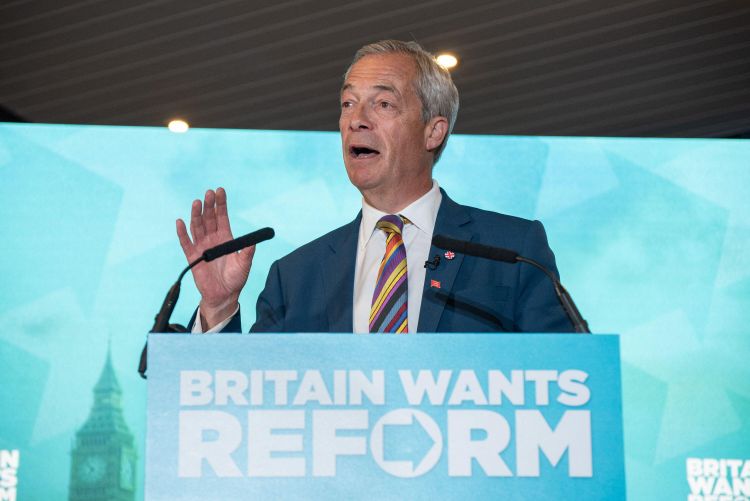
However a Reform source who has campaigned in the seat noted there was “a lot more people going with Labour than I’ve seen for a long while”, pointing to Burnham’s personal pull.
“He is a game changer, without a shadow of doubt. We’re gonna have to work our socks off”, said Gawain Towler, former Reform spinner.
Still, senior figures dismiss talk of a “Burnham bounce” as overstated.
Even so, all the sitting Reform MPs are expected to be deployed in the constituency to deliver the win.
Reform also face an electoral threat from both sides in the form of the Conservatives and Rupert Lowe’s Restore Party, raising the risk of vote-splitting on the right.
Former Conservative MP Jacob Rees-Mogg and Edward Leigh had urged a non-aggression pact with Reform, but Conservative leader Kemi Badenoch ruled out any arrangement.
“Voters should always have the opportunity to vote Conservative”, the party chairman Kevin Hollinrake told The House.
Reform is equally dismissive.
“We’ve always said no deal with the Tories. We’ve always said no deals. There’s no chance they’ll get their deposit back, the brand is so toxic,” says Tice.
The Conservative candidate, Michael Winstanley, is described as a “very well-connected Tory figure”, though MPs privately concede there may be limited on-the-ground campaigning. Attention is instead being focused on the Scottish by-election in Aberdeen South, where the party believes it has a chance of defeating the SNP and Reform.
One Tory source said there would likely be minimal MP involvement in Makerfield at all. Badenoch’s approach at the last PMQs — focusing on North Sea oil rather than issues prevalent to Makerfield — has reinforced that sense of distance.
Although the party lost its £500 deposit in Gorton and Denton, Conservative figures expect a “slightly better” performance here, citing more affluent pockets in the seat.
Meanwhile, Restore’s candidate Rebecca Shephard adds another variable. The party’s campaign is being organised locally by the disgraced former Conservative MP Scott Benton, who resigned in 2024 following a lobbying scandal. The House understands Reform previously blocked Benton from standing for the party in Blackpool South.
Those close to the Reform campaign argue that both the Conservatives and Restore are peripheral distractions, insisting the election is effectively a two-horse race between Reform and Labour — and increasingly between Reform and Burnham himself.
A Reform source said: “It’s vital that voters in Makerfield understand that only Reform UK can stop Labour here”.
