


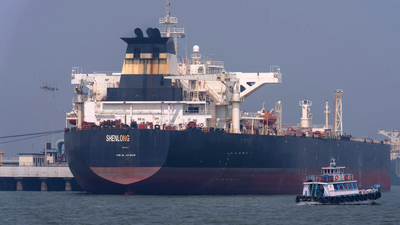
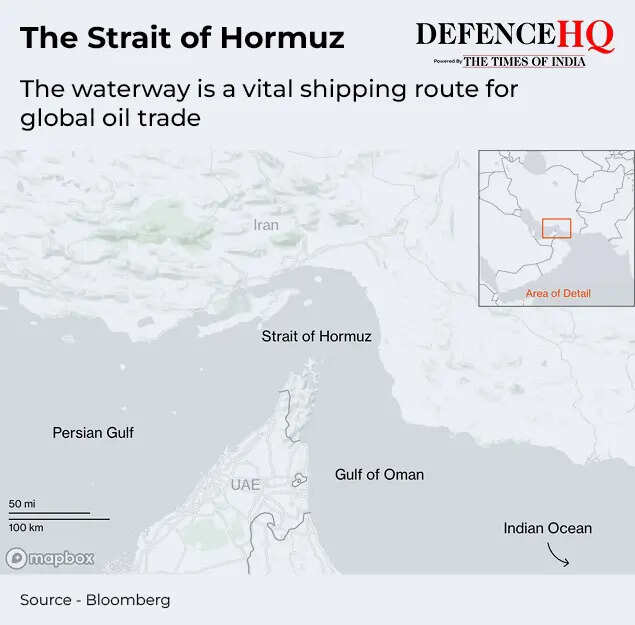
The Strait of Hormuz, which links the Gulf of Oman with the Persian Gulf, has become the focal point of global energy tensions since the war began on February 28.Ever since Iran and the US announced a two-week ceasefire, traffic through the critical waterway has remained severely restricted, with as few as 10–15 ships moving per day, compared to over 130 vessels daily before the conflict.The maritime route, which once carried more than 20 million barrels of oil per day, now operates under a tightly controlled, high-risk system defined by new rules imposed during the fragile truce.
15 vessels per day: A hard cap on movement
The most immediate condition shaping transit through the strait is the sharp cap on the number of ships allowed to pass. Under the current arrangement, Iran will allow no more than 15 vessels a day to pass through the Strait of Hormuz, Russia’s TASS news agency reported.“Under the current ceasefire, fewer than 15 ships per day are permitted to transit the Strait of Hormuz. This movement is strictly contingent upon Iran’s approval and the enforcement of a specific protocol. This new regulatory framework, operating under the supervision of the IRGC, has been officially communicated to regional parties. There will be no return to the pre-war status quo,” the news agency said, citing an Iranian official.This limitation has effectively slowed one of the world’s busiest energy corridors to a fraction of its normal capacity. The result is a growing backlog of ships stranded inside the Gulf, many of them fully loaded and waiting for clearance.“Most shipping lines are likely to remain cautious, and two weeks will not be enough to clear the backlog even if there is a marked increase in traffic,” said Torbjorn Soltvedt of risk intelligence company Verisk Maplecroft, Al Jazeera reported.
Controlled movement
Before the conflict, ships moved through the Strait of Hormuz under established international maritime norms that allowed relatively smooth and uninterrupted passage.The route functioned as a neutral global corridor, with vessels following standard shipping lanes and schedules without requiring direct approval from any single country.
.
The system has now been replaced by a controlled clearance mechanism. Ships must seek prior permission before entering the strait, with transit coordinated by Iran’s military, particularly the Islamic Revolutionary Guard Corps, BBC reported, citing the state’s semi-official Tasnim news agency.In a statement issued, Iran’s foreign ministry wrote: “For a period of two weeks, safe passage through the Strait of Hormuz will be possible via coordination with Iran’s armed forces and with due consideration of technical limitations.”Shipping companies and analysts said that the approval mechanism remains unclear and inconsistent. In some cases, even vessels that have received initial clearance have been turned back midway. This lack of transparency has added to the uncertainty, making operators hesitant to resume normal operations, Al Jazeera reported.
Alternate routes
Navigation through the strait has also undergone a significant shift.Previously, vessels used well-established central lanes that allowed safe and efficient passage through the narrow waterway.Now, ships are being directed to move along routes closer to Iran’s coastline, particularly around Larak Island, under strict military supervision.Authorities have cited the risk of naval mines in the main shipping corridor as the reason for altering these routes, Reuters reported.This change has effectively transformed a commercial maritime passage into a monitored corridor where movement is dictated by security considerations rather than operational efficiency.
Threat warnings enforce compliance
The fragile ceasefire has not removed the threat environment in the region. Ships operating near the strait have received warnings that any attempt to transit without approval could result in them being ‘targeted and destroyed.’This has significantly altered the risk calculations for shipping companies. Many operators are choosing to delay or avoid transit altogether until clearer assurances are provided.“Most shipping lines would want to get details and reassurances on what it actually takes to transit, and those details are not available,” Lars Jensen from Vespucci Maritime told the BBC.
.
“It is still too soon to tell whether this reflects a broader ceasefire-driven reopening or a previously approved exception,” said Ana Subasic from Kpler.
Crypto payments and toll proposals
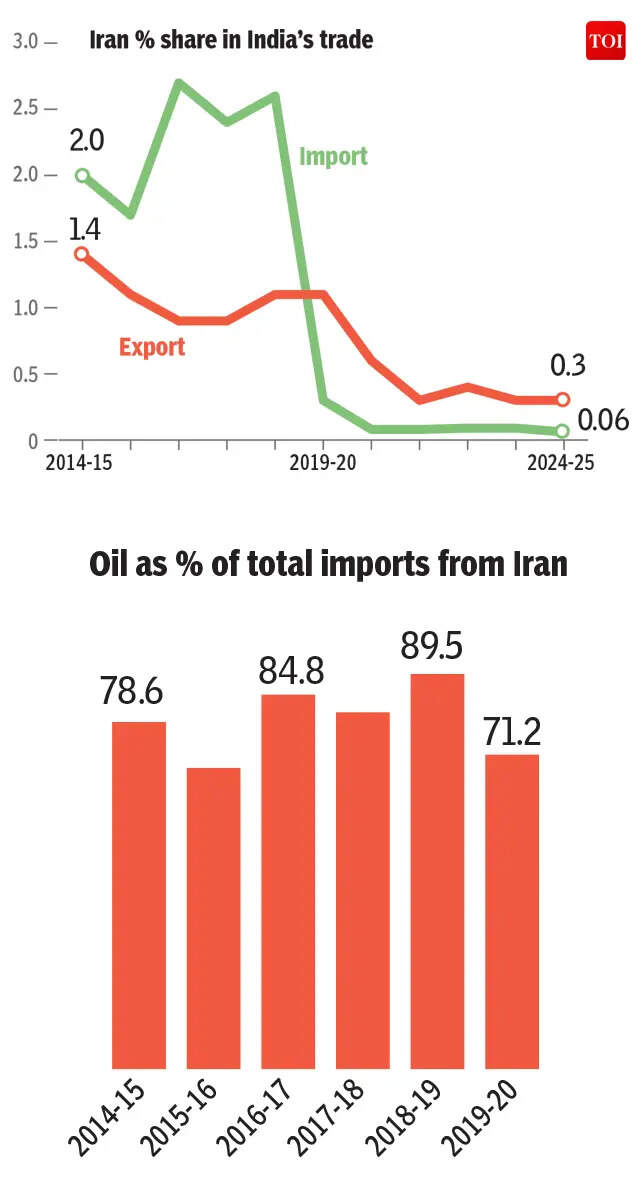
Among the most striking developments is Iran’s proposal to introduce transit fees, potentially payable in cryptocurrency. Under the suggested system, ships would be required to submit cargo details in advance, after which a fee based on the volume of oil transported would be assessed.Payments in digital currencies such as Bitcoin are seen as a way to bypass sanctions and avoid financial tracking. In some cases, reports have also suggested toll structures ranging from per-barrel charges to multimillion-dollar transit fees.However, the proposal has triggered strong global reactions. The International Maritime Organization has warned that there is no legal basis for such tolls under international law, adding that any attempt to impose them could set a ‘dangerous precedent.’
.
Strict monitoring slows down transit
Transit through the strait is no longer just restricted but also heavily monitored. Iran has indicated that it intends to scrutinise all cargo moving through the waterway during the ceasefire period to ensure that it is not used for transferring weapons.This has introduced delays at every stage of the process, from clearance to actual movement. Each vessel must undergo checks and verification before being allowed to proceed.
Legal and insurance risks keep firms cautious
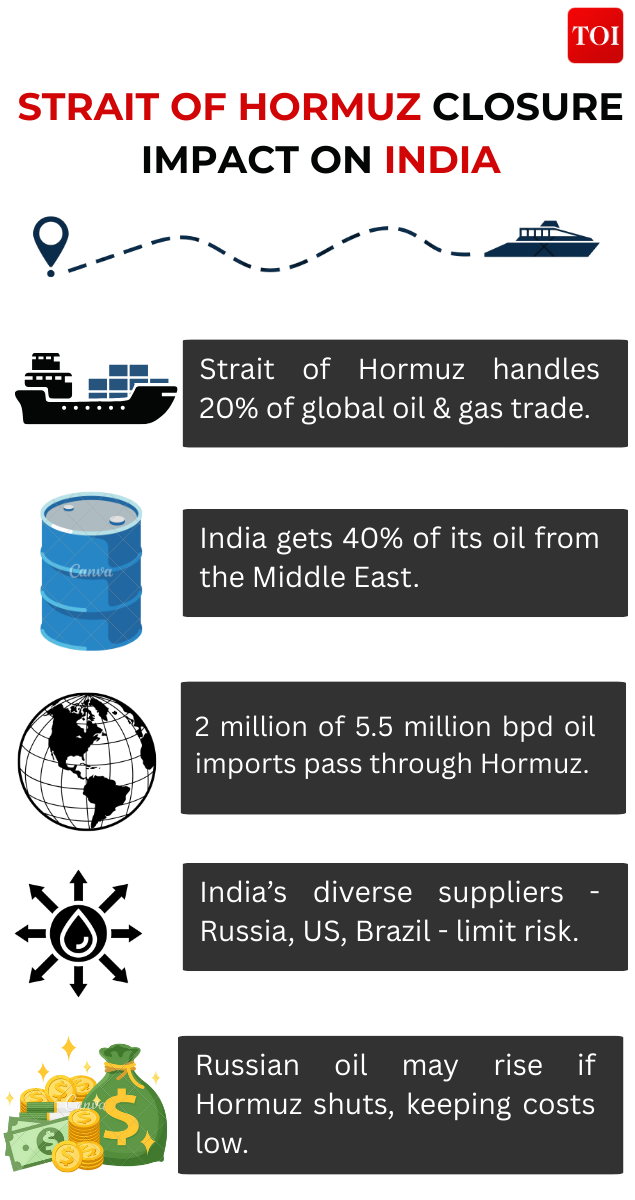
The evolving framework has created a complex legal and financial environment for global shipping companies.Paying transit tolls, especially in cryptocurrency, could violate existing US sanctions on Iran, exposing firms to penalties and legal action, according to Hormuz Monitor.At the same time, war-risk insurance premiums remain elevated due to the continued threat of conflict, mines, and military action in the region.“Nothing has really changed yet,” Jensen added, arguing it will take time before crews are confident enough to cross safely, according to BBC.Major shipping companies have therefore refrained from resuming normal operations, waiting instead for clearer rules and stronger safety guarantees.The Strait of Hormuz remains one of the most strategically important waterways in the world. Around 20% of global oil and a significant share of liquefied natural gas supplies pass through it, along with fertilisers and essential goods.Oil prices has remained disrupted since the beginning of the conflict. The prices had surged above $100 per barrel in March due to the war-induced blockage.
Poll
Should international laws be updated to address tolls and fees in maritime trade?
Following the ceasefire announcement, the prices fell sharply going as below as 14%. However, prices rose sharply with Brent Crude climbing above $96 a barrel and West Texas Intermediate (WTI) crude near $99 a barrel, as markets reacted to renewed supply risks with the fragile ceasefire.The disruption has exposed the extent to which global supply chains depend on this narrow passage. Even limited restrictions have led to supply shocks, price volatility, and logistical challenges across markets.
