


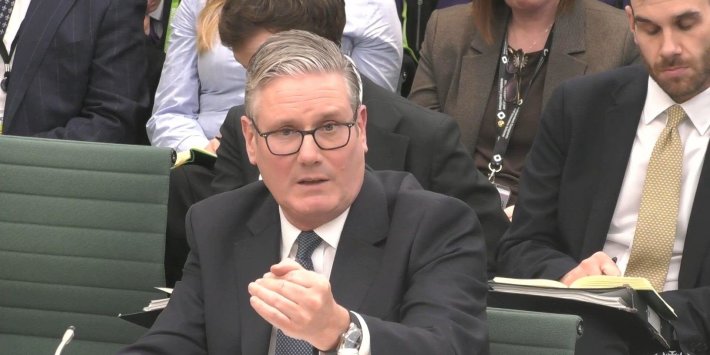
Prime Minister Keir Starmer answered questions from the Liaison Committee on Monday afternoon (Alamy)

4 min read
Prime Minister Keir Starmer has said that resident doctors in England have “lost the sympathy” of the public and their colleagues in the healthcare system, after members of the British Medical Association (BMA) voted to continue strike action this week.
Speaking to MPs on the Liaison Committee in the House of Commons on Monday, Starmer said he was “really gutted” that resident doctors, formerly known as junior doctors, had voted to continue strike action between 17-22 December.
Asked to score his disappointment out of 10, the Prime Minister said: “10 out of 10. It’s irresponsible at any time, particularly at the moment. It comes on the back of a very substantial pay increase in the last year or so.”
An indicative poll of BMA members saw 83 per cent of doctors vote to continue industrial action, with a turnout of 65 per cent. It will be the 14th resident doctors’ strike since the dispute began in March 2023.
Starmer said that the strike will put an “ever greater pressure” on the healthcare system during winter peaks in both Covid and flu across England.
“They’ve lost the sympathy of the public, frankly,” Starmer continued.
“And they’ve lost the sympathy of their colleagues, their non-doctor colleagues in the health service, who are getting on with their jobs, many of them on a much lesser rate of pay increase than the BMA, than the doctors got.
“But I would appeal to the doctors themselves to push back against the BMA in relation to this. They are losing ground in terms of the sympathy they might otherwise have had for the difficult job that they do.”
The vote of union members came after the government last week made an offer in a bid to break the impasse with the BMA, which included measures to increase the number of new speciality training posts from 1,000 to 4,000 over the next three years. However, the BMA have argued that this would not increase the overall number of posts, but would simply repurpose jobs from ‘locally employed’ roles already present in the health service.
The government also pledged to bring forward emergency legislation next year to prioritise UK medical graduates over international graduates for these posts.
However, the proposed deal did not include any further pledges on pay restoration. Resident doctors’ salaries have risen by almost 29 per cent over the past three years. However, the BMA is seeking a further increase of 26 per cent over the next few years, which it says would bring their salaries to their 2008-2009 real-terms levels to account for inflation.
BMA resident doctors committee chair Jack Fletcher said: “Our members have considered the government’s offer, and their resounding response should leave the Health Secretary in no doubt about how badly he has just fumbled his opportunity to end industrial action. Tens of thousands of frontline doctors have come together to say ‘no’ to what is clearly too little, too late.”
He added: “This week’s strike is still entirely avoidable – the health secretary should now work with us in the short time we have left to come up with a credible offer to end this jobs crisis and avert the real-terms pay cuts he is pushing in 2026. We’re willing to work to find a solution if he is.”
The BMA has said it will be in contact with NHS England throughout the strikes to address patient safety concerns if they arise, and hospital trusts will be expected to make locum arrangements to ensure safe staffing levels across hospitals in England.
In response to the vote in favour of the strikes, Streeting said: “There is no need for these strikes to go ahead this week, and it reveals the BMA’s shocking disregard for patient safety and for other NHS staff. These strikes are self-indulgent, irresponsible and dangerous.
“The government’s offer would have halved competition for jobs and put more money in resident doctors’ pockets, but the BMA has again rejected it because it doesn’t meet their ask of a further 26 per cent pay rise. Resident doctors have already had a 28.9 per cent pay rise – there is no justification for striking just because this fantasy demand has not been met.”
