


NEWYou can now listen to Fox News articles!
Globally, sepsis infection is the leading cause of death in children, taking more than 3.4 million lives per year, according to the Sepsis Alliance — and 85% of these deaths occur before age 5.
Sepsis among children is a very difficult and elusive problem for physicians to diagnose and treat, with almost 10% of cases being missed in the emergency room.
When children are admitted with the infection, the average length of stay is more than a month, per the above source.
A COMMON KILLER BUG IS ENDANGERING AMERICANS: ‘PANDEMIC IN PLAIN SIGHT’
Many people don’t know much about sepsis, according to Professor Elliot Long, team leader in clinical sciences and emergency research at the Murdoch Children’s Research Institute in Melbourne, Australia.
With sepsis, the immune system has an abnormal response to an infection — either too exuberant or too minimal.

Globally, sepsis infection is the leading cause of death in children, taking more than 3.4 million lives per year, according to the Sepsis Alliance. (iStock)
“The immune response can be underactive, which leads to severe, overwhelming infection, or it can be overactive and the immune response itself causes damage to the body’s organs, which can be life-threatening,” Long told Fox News Digital during an on-camera interview.
The professor, who received a $5 million National Critical Research Infrastructure Initiative grant this year to test potential sepsis treatments across Australia and New Zealand, noted that sepsis is easily missed because parents don’t have a good understanding of how common or severe it is.
DOCTOR REVEALS THE SECRET WEAPON AGAINST GROWING VACCINE SKEPTICISM WORLDWIDE
The symptoms are often subtle — “and they overlap with the same symptoms you’d get for self-limited viral infections that are really common in kids,” Long said.
“The paradox is that sepsis in its late stages is very easy to pick up, but the treatments aren’t very effective,” he added. “And sepsis in its early stages is very tricky to pick up — but that’s when the treatments are most likely to be effective.”
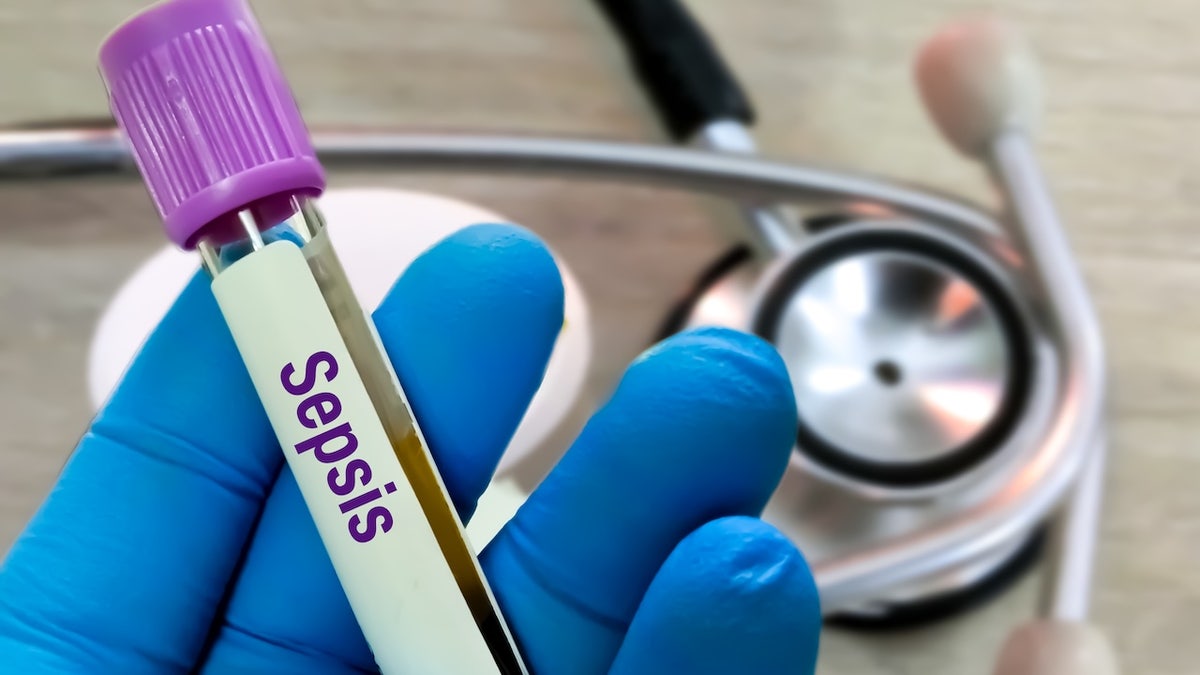
The Sepsis Alliance uses the acronym T.I.M.E. to help people remember the primary warning signs. (iStock)
Sepsis symptoms and treatments
The Sepsis Alliance uses the acronym T.I.M.E. to help people remember the primary warning signs, as follows.
T = Temperature: higher or lower than normal (fever or hypothermia)
I = Infection: signs of an infection (e.g. a cut, pneumonia, UTI)
M = Mental decline: confusion, sleepiness, difficulty awakening or arousing
E = Extremely ill: severe pain or discomfort, shortness of breath, feeling like you might die
Other warning signs may include shortness of breath, confusion, extreme pain, low blood pressure, fever, organ dysfunction, and clammy or sweaty skin.

Many people don’t know much about sepsis, according to Professor Elliot Long, team leader in clinical sciences and emergency research at the Murdoch Children’s Research Institute in Melbourne, Australia. (Murdoch Children’s Research Institute)
Early detection and treatment of sepsis is essential to preventing life-threatening complications that damage the kidney, heart, liver, brain and other organs, according to Long. Sometimes, preventing this damage involves what seems like overtreatment with antibiotics.
Treatments for sepsis are evolving and a work in progress. Currently, all treatments are supportive, meaning the child is treated with antibiotics while doctors deal with the abnormal immune responses and wait for the return of normal function.
“We have a lot of work to do to try and develop treatments that help improve outcomes for kids with sepsis.”
“Those supportive treatments include simple things like receiving oxygen and fluids, and if kids need help with their breathing, if their oxygen levels are too low or their conscious state is impaired, then they get put on a ventilator,” Long said.
“We have a lot of work to do to try and develop treatments that help improve outcomes for kids with sepsis that are not just supportive treatments, but help to modify the immune response.”
CLICK HERE TO GET THE FOX NEWS APP
Despite children’s resilience, sepsis can have a long-term impact. Long and his colleagues are on the lookout for long-term problems with cognition, emotions and motor abilities.
“The impact isn’t just on the children, it’s on the parents as well, because they’ve had an extremely stressful life event,” Long said. “And sometimes that has meant that they’ve had to contemplate the possibility of their child dying … so parents and families are left with this kind of burden of survivorship.”
Listening to parents
Because early sepsis is so easy to miss, Long emphasized how important it is for doctors to listen closely to parents.
CLICK HERE TO SIGN UP FOR OUR HEALTH NEWSLETTER
“If parents say, ‘this is a very abnormal response for my child to an infection or this is the sickest I’ve ever seen them,’ these are important red flags that this may be something more than just a minor infection,” he said.
Long told Fox News Digital that the most common age for sepsis patients is younger than 5 — and within that group, it’s especially prevalent for kids who are less than a year old.

Sepsis among children is a very difficult and elusive problem for physicians to diagnose and treat, with almost 10% of cases being missed in the emergency room. (iStock)
“They’re often pre-verbal or can’t describe the signs or symptoms, so we’re relying a lot on the parents to go through what they think is going on or what they’ve observed in their child,” the doctor added.
“Martha’s Rule” is a universal principle that allows parents to advocate for their sick child, which is especially important with sepsis, where a young life may be easily lost.
For more Health articles, visit www.foxnews.com/health
“So if parents notice their child is getting worse or deteriorating over time, Martha’s Rule has been put in place to allow them to bypass local escalation procedures and get an independent opinion,” Long said. “[This allows them to] provide the appropriate level of care for their child in the event of deterioration.”
