


How much of our future, our prosperity, and our moral leadership are we willing to sacrifice for this disastrous crusade?
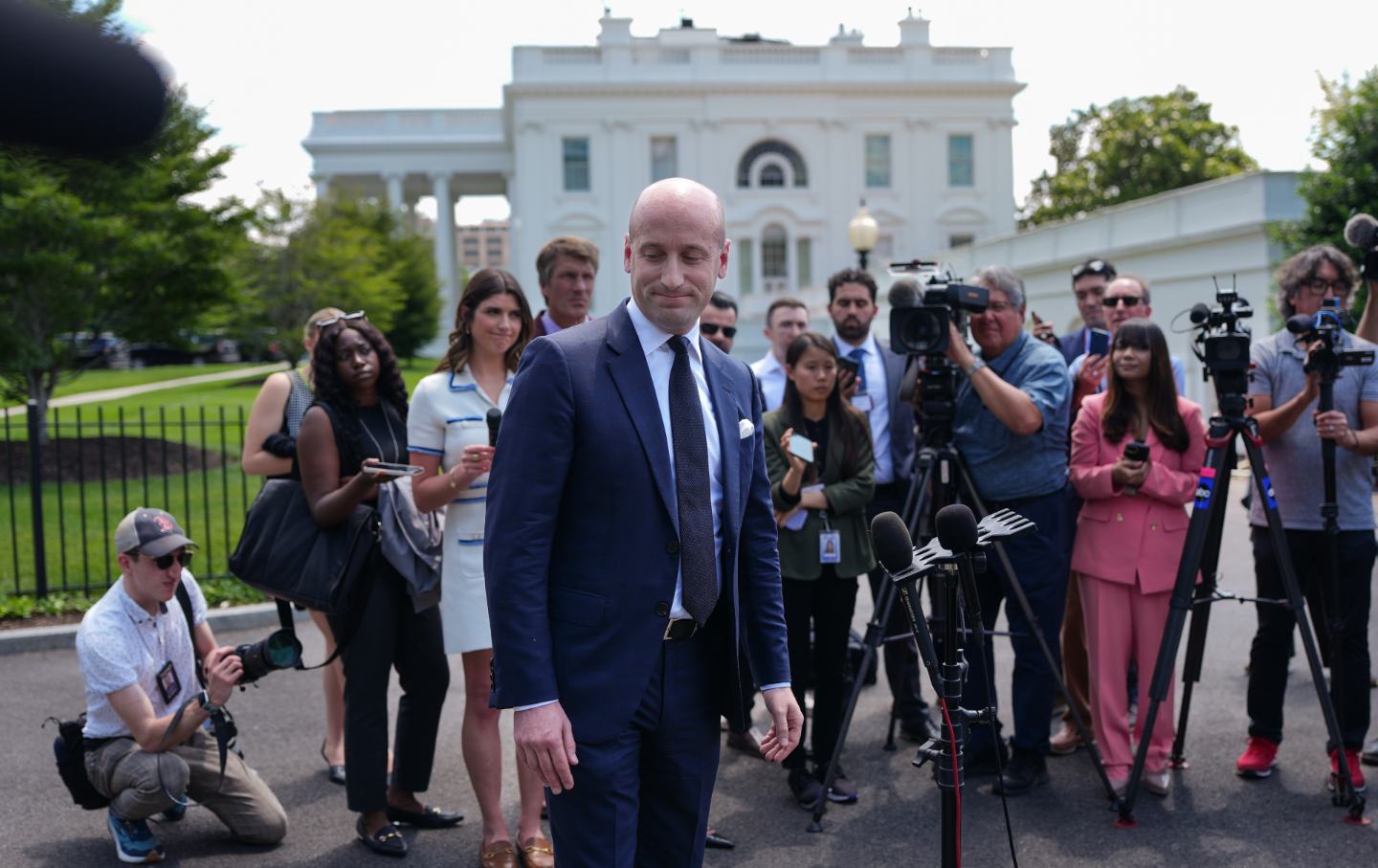
White House deputy chief of staff Stephen Miller leaves after speaking to the media outside the White House on May 30, 2025, in Washington, DC. Miller spoke out against the recent court ruling that blocked the Trump administration’s attempt to prevent Harvard University from enrolling foreign students.
(Kevin Dietsch / Getty Images)
As someone who spent years shaping education policy from within the federal government, and as a Palestinian-American who made the difficult choice to resign from the US Department of Education over the Biden administration’s approach to Gaza, I have seen firsthand how seemingly narrow policy decisions can echo far beyond their intended targets. Since President Trump took office, his administration has not only weaponized our civil rights laws in an attempt to suppress student activism but also launched a multifront attack on our nation’s top universities and their international communities.
The past couple of weeks alone have been staggering. Not only did the Trump administration threaten Columbia University’s accreditation in its continued attempts to weaponize antisemitism, but the president signed a proclamation suspending visas for all new international students at Harvard, and announced sweeping travel bans on 12 mostly Black, Arab, and/or Muslim nations.
The threat to Columbia’s accreditation status follows the very predictable authoritarian playbook. This isn’t a legitimate effort to combat antisemitism; it’s a raw power play for control, mirroring the ideological goals of Project 2025 and efforts to limit academic independence in other authoritarian takeovers. Forcing independent accreditors to punish universities undermines one of the last remaining pillars of our fragile education system. And for this to happen to a university that has already bent over backward to repress student and faculty speech is a stark warning: appeasement will not save you.
But these attacks are about more than just one university or one policy. They are a chilling trend, a message that America is no longer a welcoming society. When we start treating foreign students like poker chips in some larger political game, we’re not just hurting them; we’re hurting ourselves. And when roughly half of these students are studying at the graduate level and developing critical expertise, it is more important than ever that we retain and uplift that talent, rather than push it away.
When our government tells the world that our commitment to free expression is conditional, it is important for us to remember that many students come here because they want to study freely. Universities around the world offer sufficient education to become a doctor, a lawyer, a computer scientist. But in America you are supposed to be able to learn these skills in a free society, in a library that isn’t censored, in a classroom where open debate is welcomed.
Welcoming international students is not some act of charity on America’s part. It is a powerful economic driver for our country. International students are not just filling seats in classrooms; they are pumping nearly $44 billion into our economy and supporting nearly 400,000 jobs—from professors and university staff to the folks running local coffee shops and bookstores near campuses. About 80 percent of international students at the undergraduate level pay their own way, usually at much higher tuition rates than domestic students and typically without federal financial aid. They are, quite literally, bringing new money into our country, and studies have shown they graduate at higher rates than the overall student population.
Current Issue
When the United States becomes a less attractive, or even hostile environment, competing nations will increasingly become magnets for international students and researchers. Imagine a future where the next generation of global innovators in critical fields like AI, quantum computing, and biotechnology are overwhelmingly concentrated in countries actively competing with the US. This wouldn’t just be a “brain drain” for us; it is a “brain gain” for them, accelerating their innovation, strengthening their economies, and potentially shifting the global balance of technological and economic power.
In some instances,we are seeing that this brain drain is no longer just a future risk but a present reality. The journal Nature recently revealed a startling trend: a massive jump in US-based scientists now looking for jobs abroad in places like Canada (+41 percent), Europe (+32 percent), and China (+20 percent). At the same time, fewer international scientists are applying for jobs here. As one Australian policy institute bluntly put it, this is a “once-in-a-century brain gain opportunity” for them.
Some argue that these policies simply free up spots for American applicants. This dangerously misunderstands how excellence works. We are not just swapping one student for another; we are shrinking the entire pool of top-tier talent from which to draw.
Prior to Trump, we were seeing heartening growth from previously underrepresented regions. A huge number of international students—56 percent—are diving into STEM fields. Think about that: Nearly half of the graduates from our STEM PhD and master’s programs are international students, and their presence is directly linked to increased patent applications at US universities. They then go on to start companies—about a quarter of US billion-dollar start-ups were founded by people who first came here as international students. To willingly cut this off is economic and intellectual self-sabotage.
Having worked on federal higher education policy for over a decade, I can confidently say that the solution is not to build higher walls. It is to reinforce our foundations. We must ensure a safe, welcoming environment on our campuses for all students in our country. The repressive policies that target foreign students today will become the policies all students face. We need clear, fair rules for all students, and we must absolutely push back against any attempts to stifle legitimate discourse, especially when it comes from a place of seeking justice and upholding human rights—principles that should be universal.
This is not just about numbers or policy papers. It is about the kind of country we want to be. Are we a nation that embraces global talent and the vibrant exchange of ideas, or one that closes its doors out of fear, bigoted ideology, or political expediency, thereby strengthening those who might not share our vision for the world? The path we are on is leading us away from our strengths. The question we all need to ask is: How much of our future, our prosperity, and our moral leadership are we willing to sacrifice?
Every day, The Nation exposes the administration’s unchecked and reckless abuses of power through clear-eyed, uncompromising independent journalism—the kind of journalism that holds the powerful to account and helps build alternatives to the world we live in now.
We have just the right people to confront this moment. Speaking on Democracy Now!, Nation DC Bureau chief Chris Lehmann translated the complex terms of the budget bill into the plain truth, describing it as “the single largest upward redistribution of wealth effectuated by any piece of legislation in our history.” In the pages of the June print issue and on The Nation Podcast, Jacob Silverman dove deep into how crypto has captured American campaign finance, revealing that it was the top donor in the 2024 elections as an industry and won nearly every race it supported.
This is all in addition to The Nation’s exceptional coverage of matters of war and peace, the courts, reproductive justice, climate, immigration, healthcare, and much more.
Our 160-year history of sounding the alarm on presidential overreach and the persecution of dissent has prepared us for this moment. 2025 marks a new chapter in this history, and we need you to be part of it.
We’re aiming to raise $20,000 during our June Fundraising Campaign to fund our change-making reporting and analysis. Stand for bold, independent journalism and donate to support The Nation today.
Onward,
Katrina vanden Heuvel
Publisher, The Nation
More from The Nation
Our government spent almost a decade chasing a professor they thought was a spy. The case raises questions about our ability to pursue real perpetrators of China’s crimes.
Timothy McLaughlin
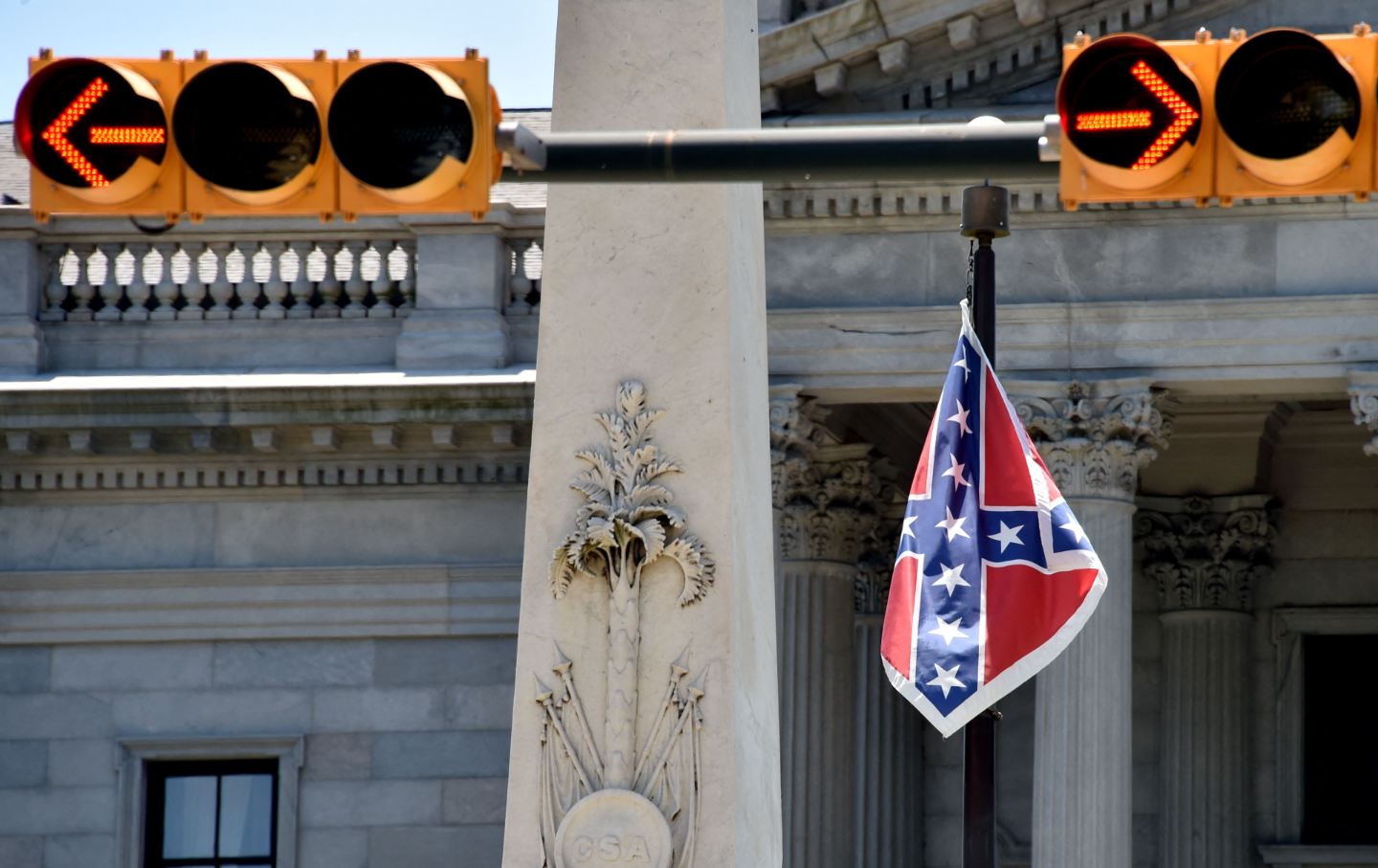
Ten years after the Charleston massacre, reverence for the Confederacy that Roof idolized is going strong.
Elizabeth Robeson
Andrei Grachev, an early booster of a Trump crypto offering, has cycled through several alleged investment scams and was convicted on fraud charges in Russia.
Jacob Silverman
By treating IT and AI as neutral tools, we obscure our ability to see—and resist—power. If just one of the big three tech giants collapses, societal mayhem could follow.
Column
/
Zephyr Teachout

The quickest way for the United States to become fascist is by politicizing the military.
Jeet Heer
